
A plumbing job goes best when the problem is understood before anyone reaches for a saw. South Fullerton Plumbing follows the same course on a dripping faucet as on a sewer lateral: hear what the customer has seen, trace the cause, explain the options, do the work and confirm that it holds.
A Typical Job, Step by Step
- Describe the problem. Where the water shows up, when the drain slows, any odd sounds from the pipes, and how long it has been happening. Photos emailed ahead help the right parts arrive with the plumber.
- Diagnosis. Daniel Wright makes a habit of tracing the cause with a sewer camera or a pressure gauge before recommending a repair, so the customer knows what is wrong before any pipe is cut.
- Options explained. Where there is more than one reasonable course, such as a spot repair or a replacement, or copper or PEX, each is explained with its trade-offs.
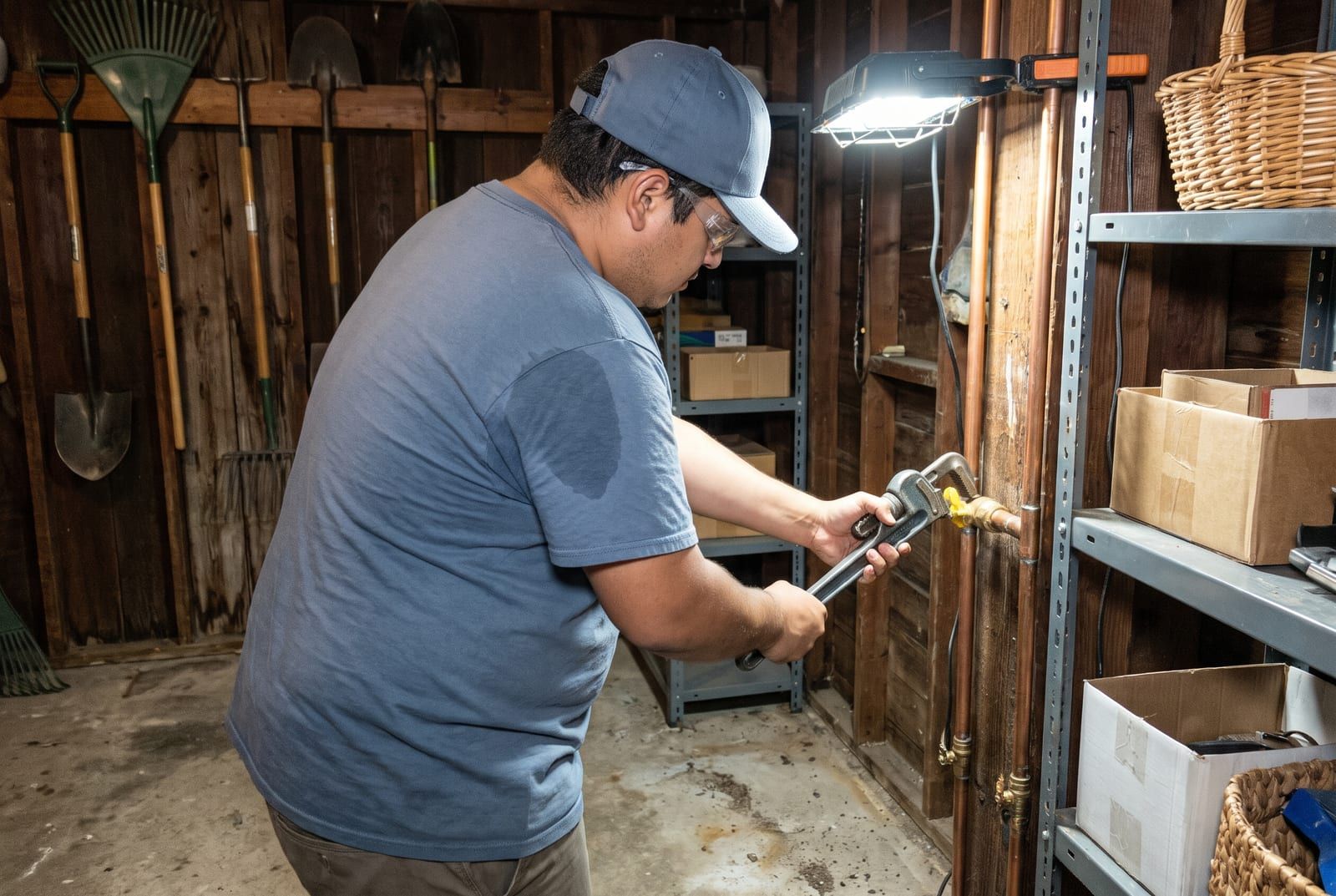
- The work. The repair or installation is carried out with the water, and where needed the gas, safely shut off.
- Testing. The fixture, line or appliance is run to confirm the problem is resolved; permitted work is then inspected by the city.
Permits in Fullerton
Permits for plumbing work in Fullerton are issued by the City of Fullerton Building and Safety Division, which can answer questions about a specific property. Placentia, Brea and La Habra each have their own building department. The table gives the usual position; the city’s answer for a particular job is the one that counts.
| Type of job | Permit typically needed | What is inspected |
|---|---|---|
| Water heater replacement, tank or tankless | Yes | Strapping, venting, gas connection, relief valve discharge |
| Whole-house or partial repipe | Yes | New piping under test pressure before walls are closed |
| Sewer lateral repair or replacement | Yes; street work also needs a Public Works encroachment permit | Pipe, bedding, slope and the cleanout |
| Gas line extension or repair | Yes | Pipe sizing and a pressure test of the gas piping |
| New fixtures in new locations | Yes | Drain, waste and vent connections and the supply |
| Like-for-like faucet, toilet or disposal replacement | Usually not | No inspection for a direct swap |
| Drain cleaning and camera inspection | No | No inspection |
Code and Safety Rules
- Water shut off at the fixture or the main before any supply line is opened
- Gas shut off and lines tested after work on gas appliances; venting sized and routed for the appliance
- A temperature and pressure relief valve on every water heater, with its discharge piped to an approved location
- Seismic strapping on every water heater, as California requires
- Backflow protection where a connection could draw contaminated water into the supply, such as irrigation and some commercial equipment
- Lead-free pipe, fittings, solder and fixtures for drinking water, under the California Plumbing Code
Preparing the Home
- Clear the space under the sink, around the water heater or in front of the cleanout so the work can be reached
- Note where the water appears, when the drain slows and any sounds from the pipes
- Email photos of the problem ahead of the visit
- Know where the main water shutoff is, and keep the path to it clear
- Keep pets away from open doors and the work area
- On a rental property, have the owner’s or manager’s authorization ready
Permits, Inspections and Responsibilities
Who pulls the permit?
For permitted work, the permit is normally taken out by the contractor doing the job, and the inspection is scheduled once the work is ready to be seen. The homeowner’s part is usually to provide access on the inspection day.
What happens at an inspection?
A city inspector looks at the work against the California Plumbing Code: strapping and venting on a water heater, test pressure on new piping, slope and bedding on a sewer line. Work that passes is signed off; anything that does not is corrected and inspected again.
What is the homeowner responsible for?
Clear access to the work area, pets kept away from open doors and work areas, and decisions on the options presented. On a rental property, the owner or manager authorizes the work; a tenant can describe the problem and provide access.
Is a permit needed for a water heater in a condo?
Yes. The permit requirement is the same; the homeowners association may have its own rules on access, work hours and venting through shared walls, and those are worth checking before the appointment.
Book a Plumbing Appointment
A short description of the problem and where it is happening is enough to begin.