
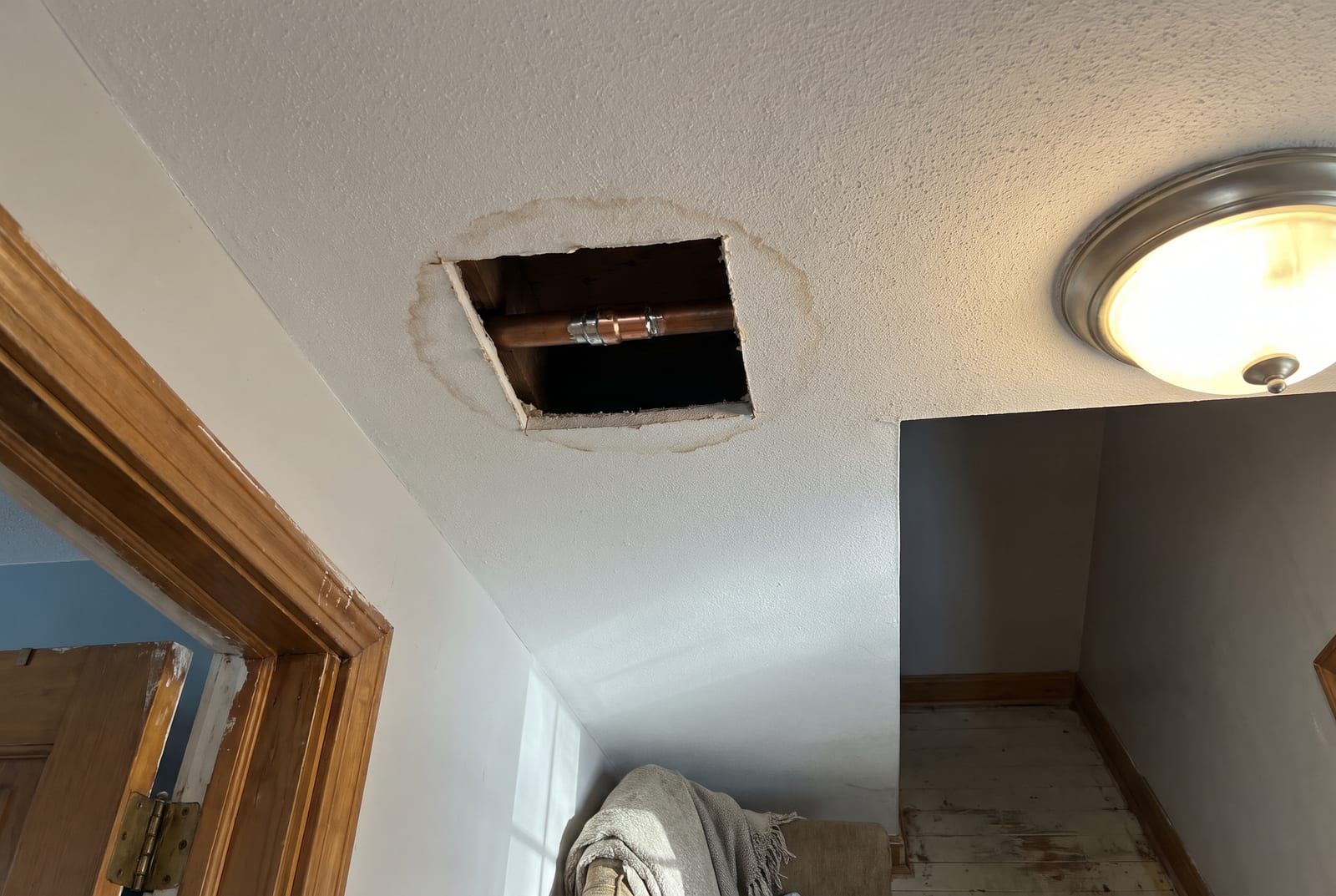
Finding a Leak Before It Finds the Floor
Leak repair is a large share of the work Daniel Wright does for Fullerton homes. Some leaks announce themselves with a drip under the sink. Others stay hidden in a wall, a ceiling or the concrete slab for months, and the first sign is a stain spreading across a ceiling or a water bill that keeps rising.
Signs of a Hidden Leak
- A water bill that rises with no change in household use
- Damp spots, stains or bubbling paint on walls and ceilings
- A musty smell in one room or behind a cabinet
- The sound of running water when every fixture is off
- Water pressure that has dropped at several fixtures
- A warm area on a tile or concrete floor, which can mean a hot water line leaking under the slab
Check the Meter
A meter check takes a few minutes and shows whether water is leaving the system somewhere you cannot see.
- Turn off every faucet, the washer, the dishwasher and the irrigation.
- Find the water meter, usually in a box near the curb, and lift the lid.
- Look at the small leak indicator, a triangle or a small dial. Note the position of the large sweep hand.
- Wait 15 to 30 minutes without using any water, then look again.
- If the indicator turns or the hand has moved, water is escaping. Close the house shutoff and look once more: if the meter stops, the leak is inside the house; if it keeps moving, it is in the line between the meter and the house.
A meter that moves with every fixture off is a reason to book an appointment, even when nothing looks wet.
Where Leaks Start and What Is Checked
A leak is traced with a pressure gauge, by isolating hot and cold lines and by listening, so that an opening in a wall or floor is made in the right place the first time.
More columns to the right: swipe.
| Location | Common sign | Typical cause | What the plumber checks |
|---|---|---|---|
| Ceiling below a bathroom | A brown ring or bubbling paint | A failed wax ring, a supply line, or a shower pan or valve | The fixture above, then the supply and drain lines feeding it |
| Under a sink | A damp cabinet floor, swollen particleboard | A loose trap, a worn supply line or a failing shutoff | Every joint from the angle stop to the tailpiece |
| Walls | Stains, soft drywall, a musty smell | A pinhole in copper or a corroded galvanized fitting | Pressure readings, then a small inspection opening |
| Under the slab | A warm spot on the floor, the sound of running water, a rising bill | Abrasion or corrosion of copper laid in the slab | The meter, isolation of hot and cold lines, a pressure test |
| Water heater area | Water on the floor or in the drain pan | The relief valve, a connection or the tank itself | Fittings and the relief valve before the tank is condemned |
| Yard and service line | A soggy patch or a sunken strip of lawn | A break between the meter and the house | The meter test with the house shutoff closed |
Older Fullerton Homes and Aging Supply Lines
Many of the bungalows and postwar houses in Fullerton were plumbed with galvanized steel supply pipe, which rusts from the inside and develops leaks at its threaded joints. Homes on slabs from the 1950s through the 1970s often have copper lines set in or under the concrete, where years of movement and hard water can wear a pinhole. When one of these leaks is repaired and the rest of the piping is in the same condition, the repair and the case for repiping are explained side by side.
Repair Methods
- Section replacement of copper, PEX or CPVC at the point of the leak
- Replacement of supply lines, angle stops and fixture connections
- Spot repair of a slab leak through a small opening in the floor
- Rerouting a failed under-slab line through walls or the attic
- Pressure regulator replacement where high pressure is straining the system
Shutting Off the Water and When to Call
Should the water be shut off when a leak is found?
Yes, when water is running or spreading. Close the fixture’s shutoff valve if the leak is at a sink or toilet; otherwise close the main shutoff, usually near the front of the house where the line enters. For a leak at the water heater, close the cold supply valve above it as well. The Emergency Plumbing page lists the steps in order.
When is a small leak worth a call?
Any leak inside a wall, ceiling or slab is worth a call, even a slow one: water that cannot dry out feeds mold and softens framing. A drip at an exposed connection under a sink can often wait for a scheduled visit if a container catches it and the cabinet stays dry.
Will the wall or floor have to be opened?
Usually a small, square opening is enough once the leak has been located by pressure readings and sound. A slab leak may be repaired at the spot, or the line may be rerouted overhead instead, which avoids breaking the floor. The options are explained before any opening is made.
Is a high water bill alone a sign of a leak?
Often, but not always. A running toilet can waste a surprising amount of water without a sound. The meter check on this page tells the two apart in a few minutes.
We a busted pipe under the house slab. They had to bust the concrete inside and took a couple of days for them to finish but it was done and done thoroughly. I called them on Thursday for this job and they started on Saturday…Read More Reviews on Yelp
For a leak that is spreading now, follow the steps on the Emergency Plumbing page and call (909) 572-8236.