
When Repairs Stop Being the Answer
A single leak calls for a repair. A house whose supply piping is failing in several places, or whose water runs brown and weak, calls for new piping. South Fullerton Plumbing repipes homes when old galvanized supply lines wear out, and replaces worn copper where pinhole leaks have started to repeat.
Signs the Pipes Are Due
- Discolored or rusty water, most noticeable first thing in the morning
- Pinhole leaks in copper lines, especially more than one in a year
- Low water pressure at several fixtures, not just one
- Visible corrosion or green and white crust on exposed fittings
- A house built before about 1960 that still has its original galvanized supply pipe
- Repairs that keep appearing in different rooms
Pre-1970s Fullerton Houses
Fullerton’s older neighborhoods hold many houses built before 1970, and a good share were plumbed with galvanized steel or early copper. Galvanized pipe closes up with rust from the inside, so pressure drops long before it leaks. Older copper in hard water can thin in places and develop pinholes. In these houses a repipe is often the point at which the plumbing stops needing attention every year.
Pipe Materials Compared
The choice between copper and PEX depends on the house, its access and the owner’s preference. Both are accepted under the California Plumbing Code.
More columns to the right: swipe.
| Material | Strengths | Drawbacks | Typical use |
|---|---|---|---|
| Copper (Type L or M) | Long service life, heat tolerant, proven in Southern California homes | Higher material cost; hard water and high velocity can cause pinholes over time | Whole-house repipes and exposed runs |
| PEX | Flexible, fewer fittings, fewer wall openings, tolerant of freezing | Must be kept out of sunlight and away from heat sources; fittings vary by system | Whole-house repipes in finished homes, attic runs |
| CPVC | Rigid plastic that does not corrode, light to handle | Becomes brittle with age and heat; joints are solvent-welded | Repairs and short runs where it is already in use |
| Galvanized steel (replaced) | Was the standard supply pipe before about 1960 | Rusts from the inside, narrows, discolors water and leaks at threads | Replaced with copper or PEX, not repaired long-term |
Scope Factors
No two repipes are the same size of job. The explainer below shows which features of a house raise or lower the scope of work. It gives no price; it shows what shapes the job.
Repipe Scope Explainer
Choose what describes the house and press Show Factors.
The explainer needs JavaScript. In short: more bathrooms, a second story, a slab and tile walls raise the scope; an open attic or crawl space and PEX keep it down. A permit applies either way.
What a Repipe Includes
- New hot and cold supply lines from the main shutoff to each fixture
- New shutoff valves at sinks and toilets, and new stub-outs at showers
- Connection to the water heater with code-compliant fittings
- Pressure testing of the new system before the walls are closed
- The permit and the inspection the city requires
Water Shutoffs, Walls and Permits
How long is the water off during a repipe?
Most of the new piping is run while the old system stays in service, and the water is shut off when the new lines are connected. In a typical house that means the water is off for part of each working day rather than for the whole job, and it is restored at the end of each day where the work allows.
What happens to the walls?
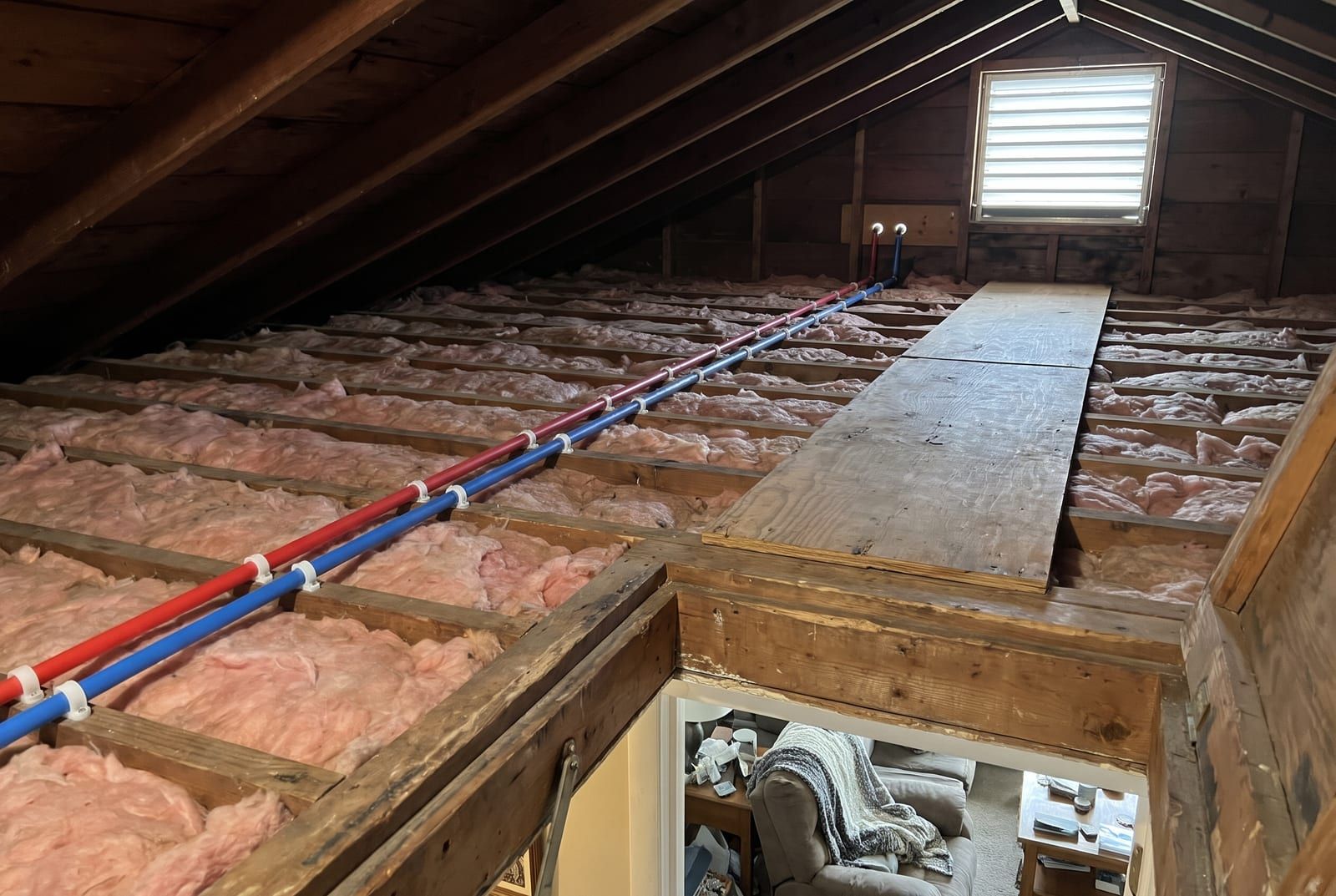
New lines are run through the attic, the crawl space or inside walls, with small openings cut where the pipe must pass or connect. The openings are left clean and square so that drywall patching is straightforward. Whether patching is part of the job is settled before work begins.
Is a permit needed?
A whole-house repipe is normally permitted through the City of Fullerton Building and Safety Division, with an inspection of the new piping before walls are closed. Neighboring cities have their own building departments with similar requirements.
Can part of the house be repiped?
Yes. When one section of piping has failed and the rest is sound, a partial repipe of that branch, the kitchen or a bathroom group, is often the sensible step. When the whole system is the same age and material, a partial repipe tends to move the next leak somewhere else.
I had been looking for a plummer to re-pipe my house. I am so glad I found him. I am very happy and satisfied with the service that was provided by him. He is very knowable and professional. He makes sure that his customer is completely satisfied…Read More Reviews on Yelp
To have the piping assessed, book an appointment or call (909) 572-8236. The year the house was built and any recent leak repairs are useful to mention.